
FASD
Focused Assessment Sonography for Dengue
DENGUE
Dengue is an endemic disease in Singapore, caused by the dengue virus (DEN). Spread of dengue is by the vector, the Aedes mosquito. DEN cause a systemic and dynamic disease with wide clinical spectrum that includes both severe and non-severe disease manifestation. After incubation period, it is followed by 3 phases febrile, critical and recovery. The duration of illness ranges from 3 to 7 or more days.
PLASMA LEAKAGE
While the majority of patients will recover, some exhibit warning signs indicating the risk of progression to severe dengue. Thrombocytopenia often prompts clinician concern but is not, by itself, indicative of hemorrhagic risk; rather, it is a useful biomarker of the illness’s critical phase. The hall mark of severe dengue development is capillary permeability leading to plasma leakage. Without this phenomenon, overt haemorrhage and shock rarely occurs. In many observations, patients traditionally classified as Dengue Haemorrhagic Fever (DHF) based on findings of petechiae and mucosal bleeding rarely have overt haemorrhage.
FASD PROTOCOL
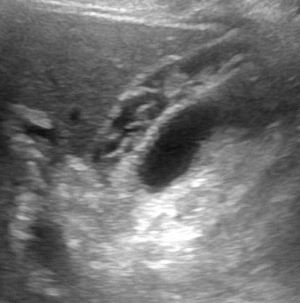
Sonography is highly sensitive for detecting plasma leakage well before it becomes apparent on radiography or clinically manifests. In 2016, K-AISER faculty incorporated routine risk stratification ultrasound scanning (FASD Protocol) on serologic confirmed dengue patients. Significant plasma leak in our FASD protocol is defined by one area with plasma leak with postural BP changes or two or more areas of plasma leak with or without postural BP changes.
The FASD technique is comprehensively discussed by Kathleen in her article. FASD [PDF, 1.11 MB]
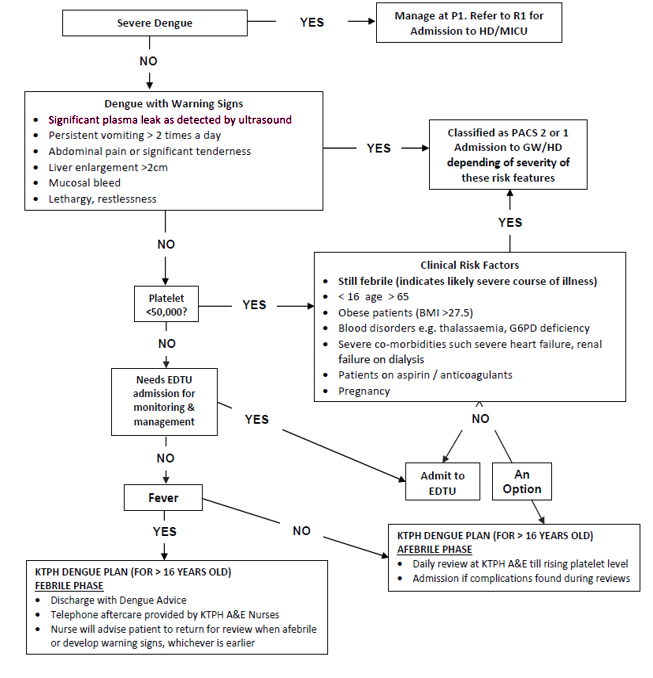
KTPH Dengue Disposition Protocol